- Discussions/
- #120/
[Feedback wanted] XCMSend
Content
AI Summary
Halloy Hydra Community,
We are a team of builders and participants across various communities within the polkadot/substrate ecosystem.
We are brought together with a shared purpose, which is to turn nascent cross-chain infrastructure into a powerful and useful “playground of possibilities”.
Mission
The mission is to make it accessible and seamless to build cross chain workflows, across XCM(hrmp) and cross-chain infrastructure.
We want it to be useful for people of all levels (for technical, non-technical as well as generalists) within the ecosystem, (think of an open-source Zapier but for cross-chain Dapps).
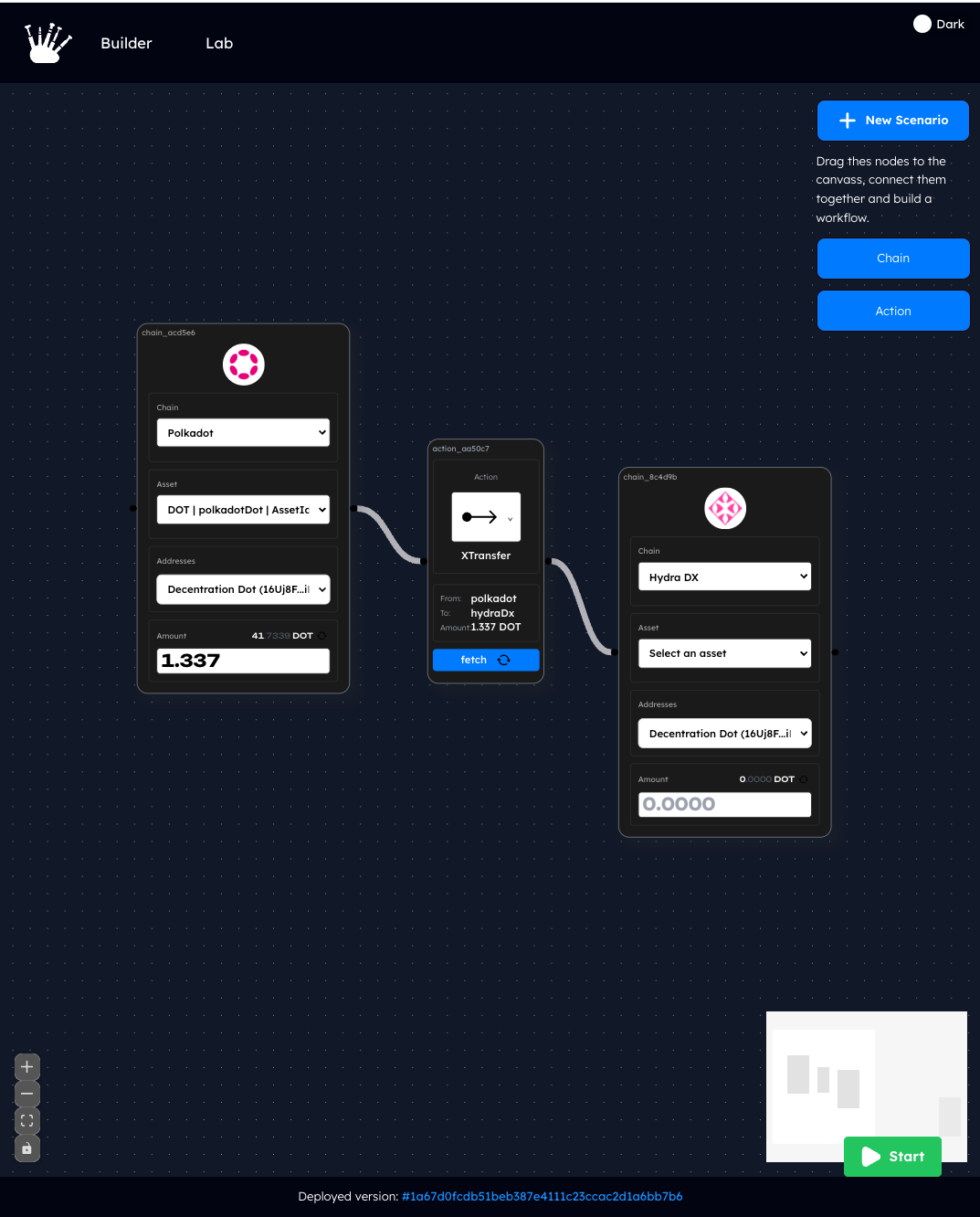
Above is a very simple bagpipe to send DOT(Polkadot) to HydraDx.
Create “Bagpipes”
The nodal based canvass will allow users to weave together “Bagpipes”, which are complex workflows of actions that would typically take a sweat and resources by technical people to put together.
Bagpipes can be as simple as sending or swapping assets, but it gets more interesting as you weave together more complex workflows. These workflows can then be for personal use, shared with other members of your team, or turned into cross-chain DApps.
Examples to stimulate some ideas
One near term example is swapping DOT(on polkadot) for USDt (on asset hub), which sounds pretty boring and simple, but currently it requires sending your DOT to hydraDx from your wallet; then swapping on hydra; then sending to asset hub.
This currently takes multiple actions across probably more than one platform. With a bagpipe this can be done all in one signing ceremony and on one platform (once we integrate hydra swaps).
3 actions on ~2 platforms into one action in one place
Minutes not weeks
In the not-so-distant future, as we add more functionality (from different chains) into the canvass environment, anyone will be able to rapidly put together workflow possibilities that many of us have yet to consider.
As the variety of features (that you can drag and drop onto the canvas) compounds, so do the possibilities increase (exponentially).
It can take minutes rather than days or weeks to put novel and useful workflows that will contain a variety of features from various chains, including: assets, DEX, GOV, NFT, Identity, Scheduling, staking, trading etc.
The project is open source under the MIT license and you can access XCMSend by:
- 1: Build it yourself(docs: https://xcmsend.github.io/deployments/debian.html)
- 2: Use the public instance at: https://app.xcmsend.com/
- 3: use the public docker image(https://hub.docker.com/r/xcmsend/xcmsend)
We would love for you to try it out, to get a sense of the vision and possibility and to provide some constructive feedback we can use, and which will inform what features we build and prioritize.
What we’ve done
We’ve integrated the basic functionality so that you can send hydraDx to polkadot and other parachains.
Enabling Swaps
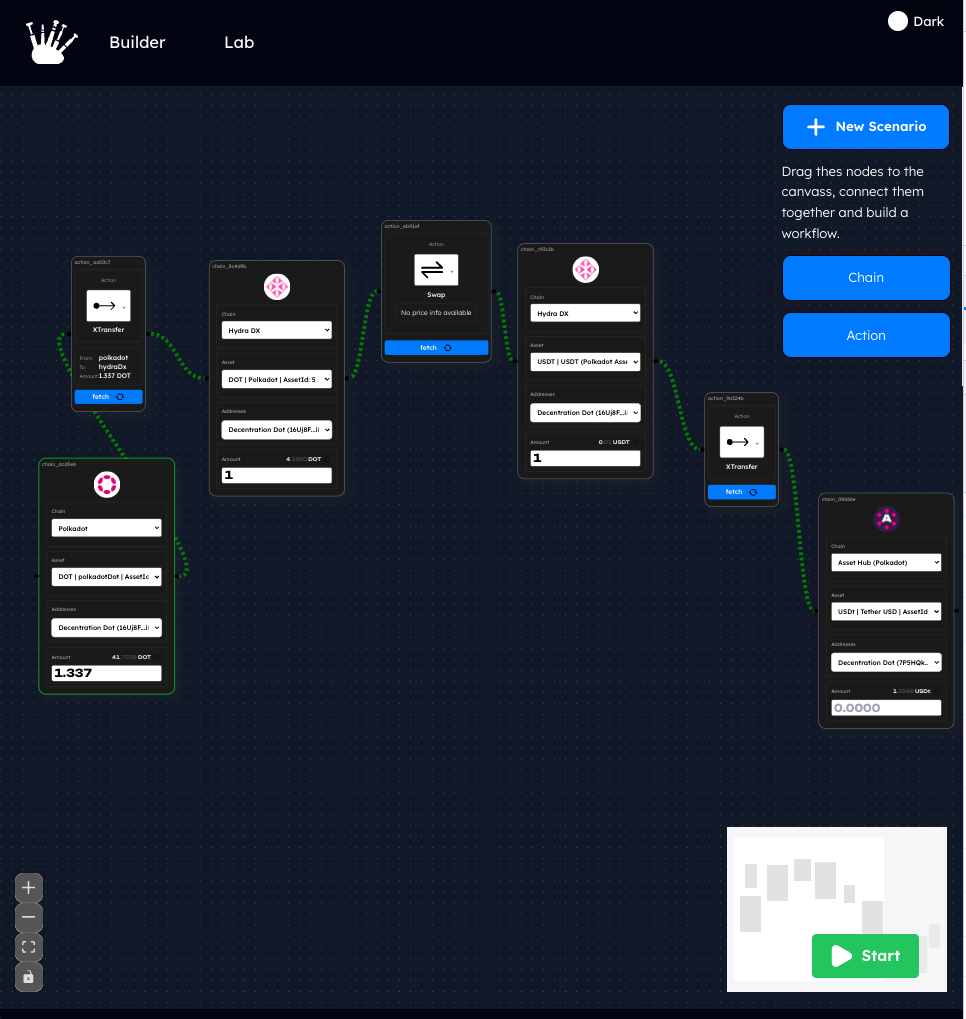
Polkadot (DOT) ->xTransfer-> HydraDx (DOT) ->Swap-> HydraDx(USDt) -> xTransfer -> AssetHub.
Near Term priority
The next order of tasks we want to prioritize is swapping functionality.
Weaving together influential communities (Near Term) Roadmap
- HydraDx
- Interlay
- Wormhole
…
What we’d love to do
After gaining community feedback on our new project, we wish to seek treasury funding for enabling swaps using the HydraDx SDK, Omnipool, and spot price orders.
This swapping feature will enable anyone to interact with the Omnipool dex and build them into their “Bagpipe” workflows.
Useful links:
https://xcmsend.github.io/chapter_1.html
https://hub.docker.com/r/xcmsend/xcmsend
https://github.com/XcmSend/app-v0.0.1
Note: The UX is still in beta, so do only keep amounts small until we release our stable version.
Thanks and please share some feedback in the comments!:)
Edited
SubSquare is a team of builders and participants who want to make it easy for people to build cross-chain workflows. They have created a nodal based canvas to weave together "Bagpipes", which are complex workflows of actions that can be used for personal use, shared with others, or turned into cross-chain DApps. They have integrated basic functionality so that you can send hydraDx to Polkadot and other parachains. Their next priority is swapping functionality. They want to seek treasury funding for enabling swaps using the HydraDx SDK, Omnipool, and spot price orders. The project is open source under the MIT license and you can access XCMSend by building it yourself, using the public instance, or using the public docker image.
Reply
Up
Share
Comments